Hoodie weight, side by side: mid-weight vs heavyweight fleece
8 oz, 10 oz, 12.5 oz. The practical gap between fleece weights is larger than the numbers suggest. A buyer's-guide breakdown of the three bands and how to pick.
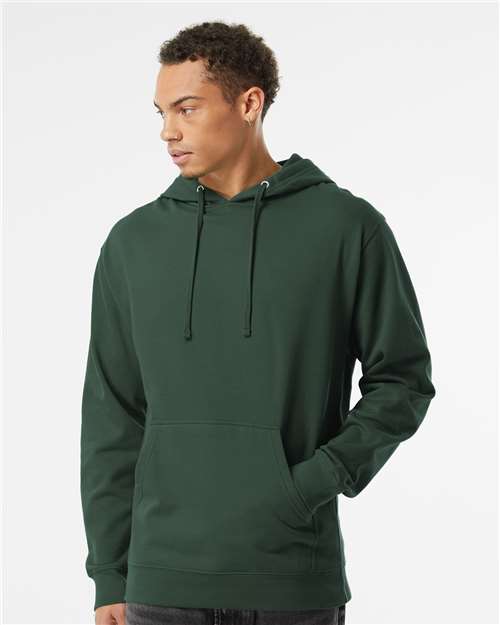
**Short version.** A mid-weight 8 oz pullover and a 12 oz heavyweight aren't the same garment in different sizes. They're different garments. Pick mid-weight when cost-per-piece matters and the customer wears it across seasons. Pick heavyweight when the garment is doing brand work and needs to feel premium in hand. The middle band (9–10 oz) is where most retail merch lives.
The three practical fleece bands
**Mid-weight (7.0–8.5 oz):** the "everyday hoodie." Layers under a jacket, prints cleanly, ships at a reasonable per-piece cost. Independent Trading SS4500, Gildan 18500 (8.0 oz), and Bella+Canvas 3719 (7.6 oz sponge fleece) are mainstays. This is the band most school, team, and promotional runs land in.
**Mid-heavyweight (9.0–10.5 oz):** the "real hoodie" tier. Fabric reads thicker, the garment hangs heavier on the body, and the difference is obvious in hand. Champion S700 (9.0 oz), Comfort Colors 1567 (9.5 oz pigment-dyed), and Hanes F170 Ultimate Cotton (10.0 oz) cluster here. Best general-purpose pick for retail merch.
**Heavyweight (11.0 oz+):** the premium-streetwear, workwear, and skate zone. Reads expensive in the customer's hand, prints like canvas, costs more (sometimes meaningfully more). Camber 232 (12.0 oz), Independent Trading IND5000P (10.0 oz reverse-weave), and other Camber-style heavyweights live here.
How to pick by use case
**Promotional and event wear:** mid-weight. The hoodie is worn a few times and the cost-per-piece on a 100–500 unit run matters more than thickness.
**School and team spirit wear:** mid-weight. Wide youth-through-adult-3XL availability matters more than premium feel; the wearer is putting it on for practice, not curating a wardrobe.
**Corporate gifts and uniforms:** mid-heavyweight. Recipients evaluate as consumers. A 6 oz lightweight reads "cheap," a 9–10 oz reads "thoughtful." Splurge here.
**Retail drops, brand merch:** mid-heavyweight or heavyweight. Depends on brand position. Lifestyle and fashion brands often pick mid-heavyweight for the drape; workwear, skate, and premium streetwear pick heavyweight for the in-hand feel.
**Cold-weather outerwear (mild climates):** heavyweight. A 12 oz reverse-weave with a brushed interior holds heat well enough to be the outer layer in fall and early winter.
Specs to confirm before you commit
**Cotton-poly ratio.** 50/50 prints and shrinks differently than 80/20. The blend is more important than weight for printing fidelity. 80/20 ringspun is the most print-friendly common option.
**Reverse-weave or standard knit.** Reverse-weave construction (knit horizontally rather than vertically) resists vertical shrinkage. That's why Champion's reverse-weaves stay long across washes. They cost more; for a multi-year team program, often worth it.
**Pocket construction.** Slash-pocket, kangaroo, or no-pocket changes how a chest or front-center print sits. Run a paper mockup at the actual print size before approving proofs. Every printer has a story about the logo that disappeared into a kangaroo seam.
**Drawcord and eyelets.** Some brands moved away from metal eyelets and tipped drawcords in the last few years to meet retail safety standards. The look you remember from older samples may not match what ships now. Check the current product photo, not the legacy spec sheet.
**Hood lining.** Self-fabric hood lining drapes well and prints clean. Jersey-lined hoods feel more premium but show wear at the seam faster. Contrast-lined hoods (a different color inside the hood) read sportier: fine for teams, polarizing for retail.